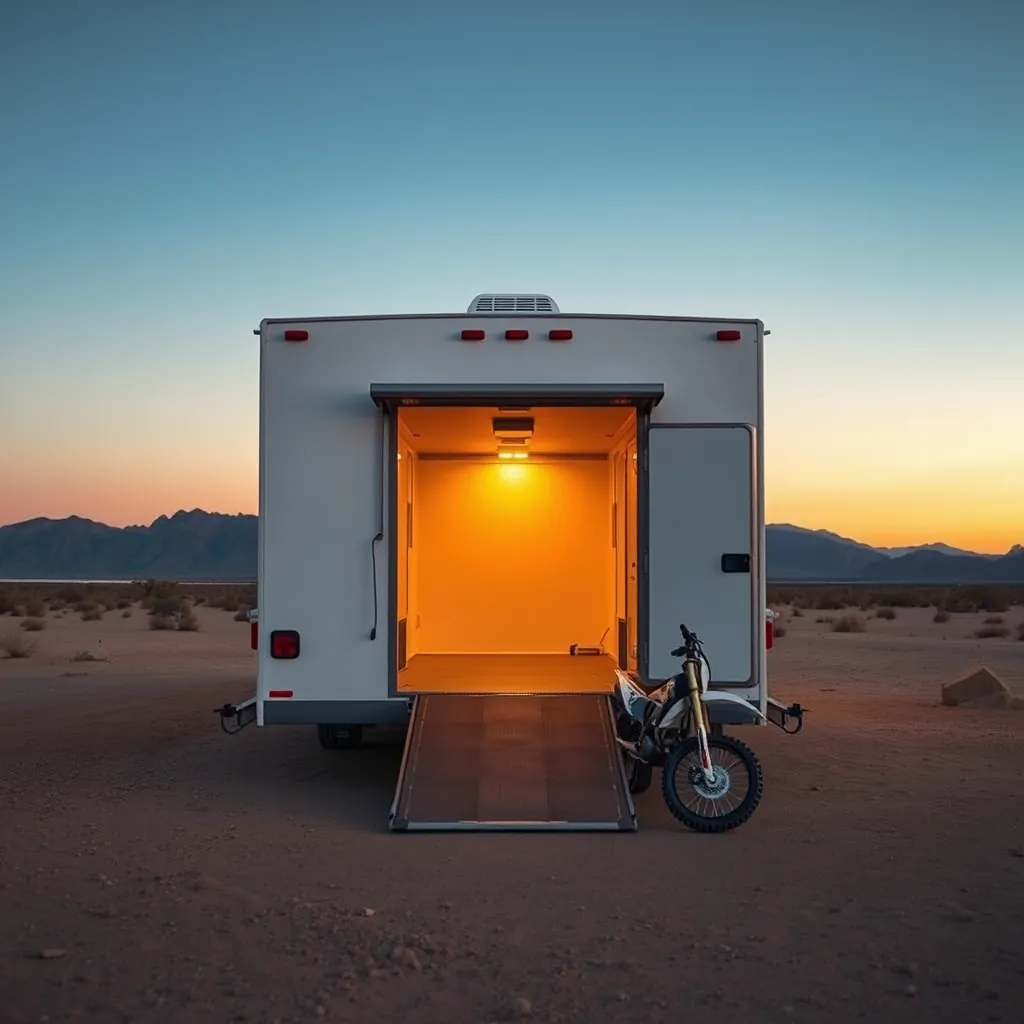
Why Toy Hauler Insurance Is More Complicated Than Standard RV Coverage
A standard RV policy covers the unit. A toy hauler has a unit AND a garage — and what's in that garage changes everything.
The moment you roll a $25,000 Polaris RZR into your trailer's rear garage section, you've introduced a coverage gap that most toy hauler owners don't discover until they file a claim. Standard RV personal property coverage typically provides $3,000–$5,000. A single high-end UTV exceeds that before you add accessories. And the moment you ride the ATV off the ramp, the RV policy no longer covers it at all.
Properly insuring a toy hauler requires understanding several distinct coverage layers, what each covers and doesn't, and how to build a complete package without gaps.
The Three Coverage Layers Every Toy Hauler Owner Needs
Layer 1: The Toy Hauler Unit Itself
This is the core RV policy — coverage for the fifth wheel or travel trailer as a physical unit.
Comprehensive and collision are the foundation. Comprehensive covers fire, theft, vandalism, hail, wind, flooding, and other non-collision perils. Collision covers damage from impact with another vehicle or object. Together, these cover the overwhelming majority of physical damage scenarios you'll encounter.
Total loss replacement is the coverage you want on a newer unit. Standard policies pay actual cash value (ACV) — what a comparable used unit is worth today, which reflects depreciation. Total loss replacement pays for a brand-new comparable unit. On a $90,000 fifth wheel that's two years old, the difference between ACV and replacement cost is often $15,000–$25,000. If you have a unit under three or four years old, this is the most important coverage decision you'll make.
Vacation liability kicks in when you're set up at a campground and someone gets hurt — a trip hazard, a visitor injury at your site, incidental property damage. Think of it as homeowners liability that travels with you to the campground.
Emergency expense coverage pays for temporary lodging and transportation if your toy hauler is disabled due to a covered loss far from home. If you're at a rally in Montana and a storm takes out your slide-out, emergency expense keeps you housed while repairs happen.
Roadside assistance for the trailer unit itself (separate from your tow vehicle's roadside program).
Layer 2: The Garage Contents
This is the gap most toy hauler owners are underinsured for.
Standard RV personal property coverage of $3,000–$5,000 is designed for the furnishings and personal effects in your living quarters — not the recreational vehicles in your garage. The moment your garage value exceeds $5,000 (which happens with a single mid-range ATV), you need additional coverage.
Options for garage contents:
*Scheduled personal property endorsements:* Some RV carriers allow you to schedule specific high-value items at agreed value within your RV policy. Works for lower-value items but gets expensive at higher vehicle values.
*Separate OHV/powersports policies:* The correct solution for ATVs, UTVs, and motorcycles. A dedicated policy for each vehicle covers it at its full value — while stored AND while riding. This is almost always more coverage for comparable or lower cost than trying to insure recreational vehicles through the RV policy.
*Inland marine / equipment floater:* For high-value ancillary equipment — generators, tools, camping equipment — a floater provides broader coverage than standard personal property limits.
The cleanest and most cost-effective approach for most toy hauler owners with multiple vehicles in the garage: RV policy for the unit, OHV policy per vehicle.
Layer 3: The Toys While You're Riding
This is the coverage gap that matters most when you're actually using what you hauled.
Your RV policy's personal property coverage applies to the ATVs, UTVs, and motorcycles while they're stored in the trailer. The moment you ride them down the ramp and onto the trail, that coverage ends. If you crash your Can-Am on a desert trail, your toy hauler policy won't pay for the damage or the liability. You need a dedicated OHV insurance policy.
OHV policies cover: - Liability (bodily injury and property damage you cause to others) - Collision (damage from impact or rollover) - Comprehensive (theft, fire, vandalism, weather) - Medical payments (occupant medical bills) - Accessories (light bars, winches, lifted wheel kits, audio systems)
OHV insurance is required in many states for operation on public trails and state OHV parks — and makes sense everywhere even where not legally required, given the liability exposure of recreational riding.
Fifth Wheel vs. Travel Trailer: Coverage Differences
Both are toy haulers, but with meaningful insurance differences:
Fifth wheels connect via a gooseneck-style hitch in the truck bed. They're typically higher-value units with more square footage, larger garages, and more complex slide-out configurations. Total loss replacement is especially important given the higher price points ($60,000–$150,000+ for premium units).
Travel trailers connect via a standard bumper-pull ball hitch. They're generally lower in value and more maneuverable. Coverage types are identical to fifth wheels, but base premiums tend to be lower due to lower unit values.
In both cases, the garage contents coverage gap is the same — and requires the same layered solution.
Full-Time Toy Hauler Living
If your toy hauler is your primary residence, a standard RV policy is not built for you. Standard policies assume recreational use — maybe 3–4 months per year of active use. Full-timers have entirely different coverage needs:
Personal property limits need to reflect your entire household — not a weekend's worth of camping gear. Upgrading from $5,000 to $25,000–$50,000 in personal property coverage is typical for full-timers.
Liability needs to be homeowners-equivalent. When your toy hauler is home, and you host visitors, and something goes wrong, you need the same liability protection a homeowners policy would provide.
Loss of use needs to account for the cost of replacing your housing if the unit is destroyed — extended hotel stays, rental costs — not just a few nights while a weekend RV is repaired.
Full-timer endorsements add these elements to a standard RV policy. If you're living in your toy hauler, talk to us about what needs to change.
Cost: What to Expect
Toy hauler unit (fifth wheel or travel trailer): - Mid-range fifth wheel ($50,000–$80,000): $500–$900/year - Higher-value fifth wheel ($80,000+): $700–$1,200+/year - Travel trailer ($25,000–$60,000): $350–$700/year - Add total loss replacement: +$100–$300/year - Add full-timer endorsement: +$200–$500/year
OHV policies (per vehicle): - ATV: $100–$350/year - UTV / side-by-side: $200–$600/year (higher for high-performance models) - Dirt bike or motorcycle: $100–$400/year
Total package (example): A toy hauler owner with a $70,000 fifth wheel, one Can-Am UTV, and two dirt bikes might expect: - Fifth wheel policy: $650/year - Can-Am policy: $450/year - Two dirt bike policies: $250/year combined - Total: ~$1,350/year for complete coverage with no gaps
Many people are surprised this number isn't higher. Separate, purpose-specific policies for each asset are often more efficient than trying to cover everything through a single RV policy.
What's NOT Covered (Know Before You Claim)
Mechanical breakdown: RV insurance covers sudden, accidental losses — not mechanical wear and failure. If your slide-out motor burns out after years of use, that's a maintenance issue. RV extended warranties cover mechanical breakdown; RV insurance doesn't.
Normal wear and tear: Roof deterioration, seal failure, water intrusion from deferred maintenance — these are maintenance items. Insurance covers sudden accidental damage.
OHV on track or in competition: Most OHV policies exclude use in racing or organized competition events. Trail riding, OHV parks, and general recreation are covered; organized racing typically is not.
Towing the trailer if you're uninsured on the tow vehicle: Your liability while towing attaches to your tow vehicle's auto policy. If that policy lapses, you have a gap. Keep your tow vehicle insured.
How to Get a Quote
Getting a complete toy hauler coverage quote takes about 15 minutes once you have the basics ready:
For the unit: Year, make, model, GVWR, purchase price or current value, how you use it (seasonal, full-time, storage), and your storage location.
For OHV vehicles: Year, make, model of each vehicle, estimated value including accessories, how and where you ride (state requirements may apply), and driver information.
Call 844-967-5247 or request a quote online. We'll walk through your full setup — trailer plus all the toys — and build a complete coverage package. Same-day quotes for most requests.
Checklist: Is Your Toy Hauler Coverage Complete?
Before you finalize any policy, run through this:
- [ ] Toy hauler unit: comprehensive and collision covered at replacement cost (not ACV for new units)
- [ ] Vacation liability included
- [ ] Emergency expense coverage included
- [ ] Personal property limit reviewed against what you actually have in the living quarters
- [ ] Each ATV/UTV/motorcycle on its own OHV policy
- [ ] OHV policies include liability AND comprehensive/collision
- [ ] Full-timer endorsements added if the unit is your primary residence
- [ ] All policies reviewed for gap between RV coverage and OHV coverage
If every box is checked, you have complete coverage. If any are missing, call us and we'll close the gaps.